The screenshot problem
Most 3D airport models look good in at least one screenshot. Pick the right sun angle, the right weather, and even a basic model can look convincing. The problem starts when you change the conditions. Rotate the time of day to early morning. Turn on overcast. Add rain. Suddenly surfaces that looked fine at noon are too bright, too dark, or reflecting light in ways that real concrete and asphalt never would.
This is the gap between traditional texturing and physically based rendering. Traditional texturing paints color onto surfaces. PBR describes what a surface is made of and lets the rendering engine figure out how it should look under any condition. The first approach gives you a model that looks correct in a screenshot. The second gives you a model that behaves correctly in a simulation.
What PBR actually is
Physically based rendering is a texturing approach where each material is described by a set of properties that correspond to measurable physical characteristics. Instead of painting shadows and highlights directly into a texture, you provide the engine with data about the surface, and the engine calculates the correct appearance based on the current lighting, weather, and camera angle.
For airport modeling, we work with four core texture maps per material. Each one controls a different aspect of how light interacts with the surface.
Albedo
The base color of the surface with no lighting information baked in. Pure color data. Asphalt is dark gray, concrete is lighter, grass is green. No shadows, no reflections, just the flat diffuse color of the material.
Normal
Surface detail without adding geometry. Cracks in concrete, aggregate texture in asphalt, the weave pattern of chain-link fencing. The normal map tells the engine which direction each point on the surface faces, creating the illusion of depth.
Roughness
How smooth or rough a surface is. New asphalt is rougher than polished terminal flooring. Wet surfaces are smoother than dry ones. The roughness map controls how sharply the surface reflects light — matte vs. glossy.
Metallic
Whether a surface behaves like a metal or a non-metal. Hangar doors, aircraft tie-down rings, and light poles are metallic. Concrete, asphalt, and painted surfaces are not. This changes how reflections appear.
Why it matters at airports
Airports are some of the most material-diverse environments you can model. A single ramp area might contain fresh asphalt, old asphalt, concrete pads, painted markings, painted steel, aluminum cladding, glass, grass, gravel, and rubber-stained touchdown zones. Each of those surfaces has different physical properties and behaves differently under varying light.
When a pilot is on short final during a twilight approach, the visual cues they rely on come from how light interacts with these surfaces. The way runway markings glow under landing lights. The difference between the dark matte of asphalt and the lighter concrete of a displaced threshold. The wet sheen of a rain-soaked taxiway. If the materials are wrong, those cues are wrong.
At PSSW, we don't paint highlights onto our runway textures. We define the roughness of the asphalt and let the sim engine calculate how landing lights bounce off it. The result looks correct at 6 AM, noon, 6 PM, and in rain — because the material data is physically correct, not manually faked for one condition.
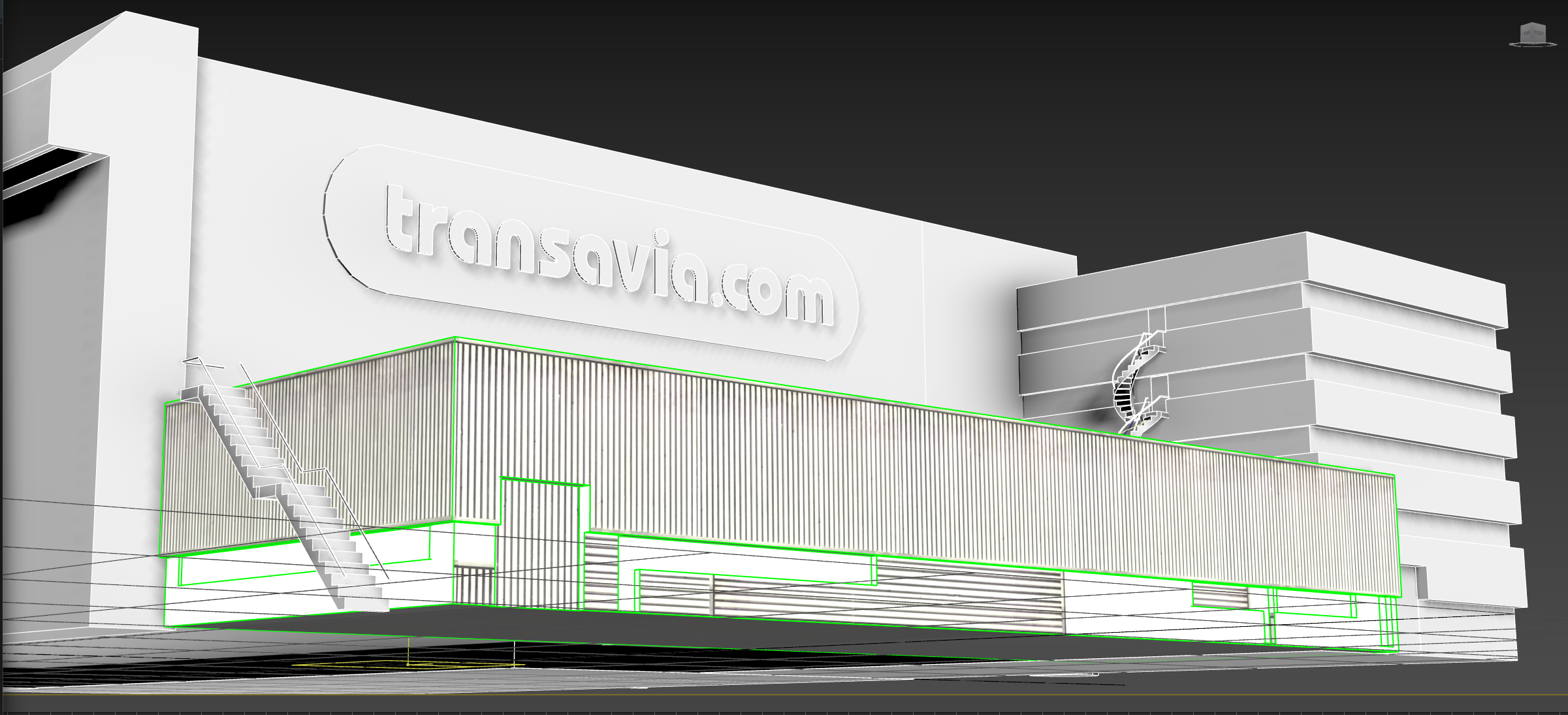
Wireframe-to-texture: a building at EHAM during the PBR texturing phase
Calibration from reference
Getting PBR right at airports isn't just about having four texture maps. It's about calibrating those maps against the real facility. We shoot reference photography under controlled conditions where possible and use it to set accurate albedo values. Old weathered asphalt has a different albedo than freshly laid surface. The painted centerline of a taxiway reflects differently from the asphalt on either side.
For roughness, we reference the material type and age. Freshly laid asphalt has higher roughness than a polished concrete apron. A rubber-contaminated touchdown zone has lower roughness than clean runway surface. These values are set based on published material properties and validated against reference photos taken at multiple times of day.
The training implication
For consumer simulation, PBR materials make the product look good. For professional training environments, they serve a functional purpose. Pilots training on a digital twin of their airport need the visual cues to be correct. The way light plays across surfaces during a night approach, the visual difference between taxiway and apron, the way rain changes the appearance of every surface — these are the details that build correct perception in a training environment.
A model with baked lighting looks great in the marketing screenshot. A model with calibrated PBR materials looks correct in the cockpit at 5:30 AM in February, which is when the training value actually matters.
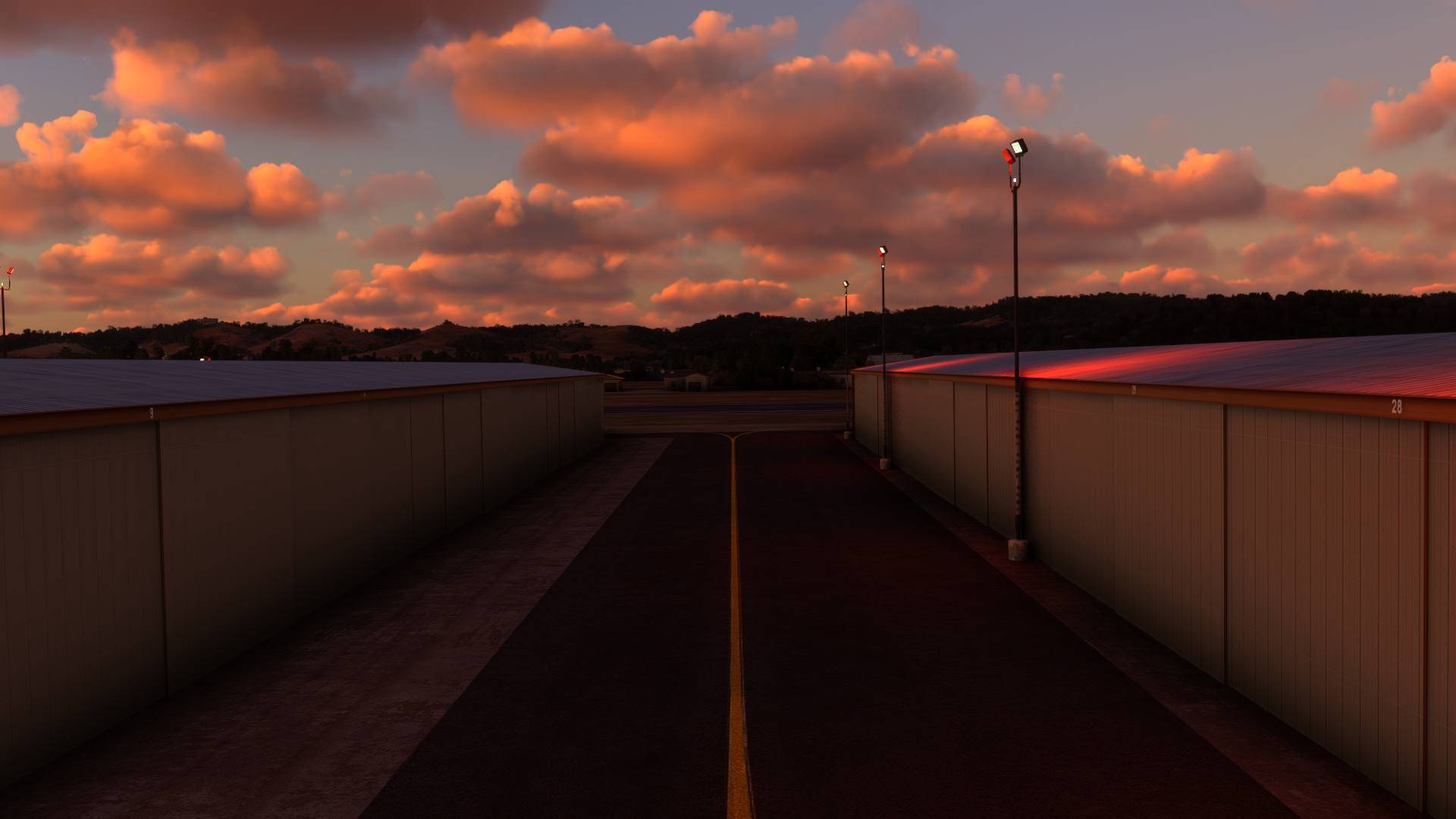
PBR in action — metallic hangar surfaces catching golden hour light at KSBP
What we deliver
Every PSSW airport ships with a full PBR material set. Four texture maps per material, calibrated against on-site reference where available, and validated across the full range of lighting conditions supported by the simulation platform. We test at dawn, noon, dusk, night, overcast, rain, and snow. If a surface doesn't respond correctly under any of those conditions, we adjust the material data until it does.
For B2B clients with specific validation requirements — military training standards, airline procedure briefing accuracy, or regulatory visualization needs — we can provide material documentation showing the reference source and calibration basis for each surface type in the model.